Is dry needling the same as acupuncture?
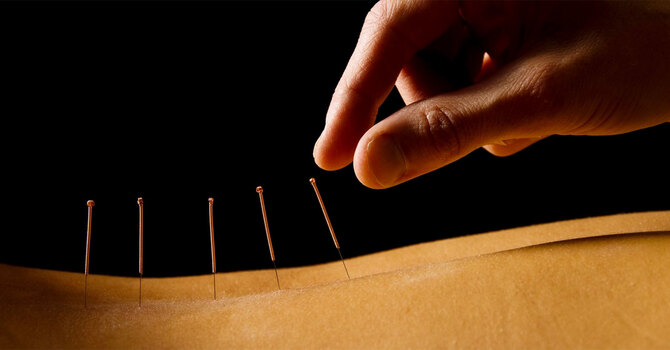
I get this question quite often in my Lawrence office, and honestly, it makes total sense. Both use the same super thin needles. Both involve those needles going through the skin. From the outside, they look pretty much identical.
That said, only one of them happens in my clinic, and that's dry needling. In this post I'll walk you through dry needling vs. acupuncture, how each one works, what you'll feel on the table, and why dry needling is the tool I reach for with my patients.
Let's break it down.
The short answer
The biggest difference between dry needling and acupuncture is the why behind the needle. Acupuncture comes from Traditional Chinese Medicine and places needles along points and pathways (called meridians) believed to guide the flow of energy through the body.
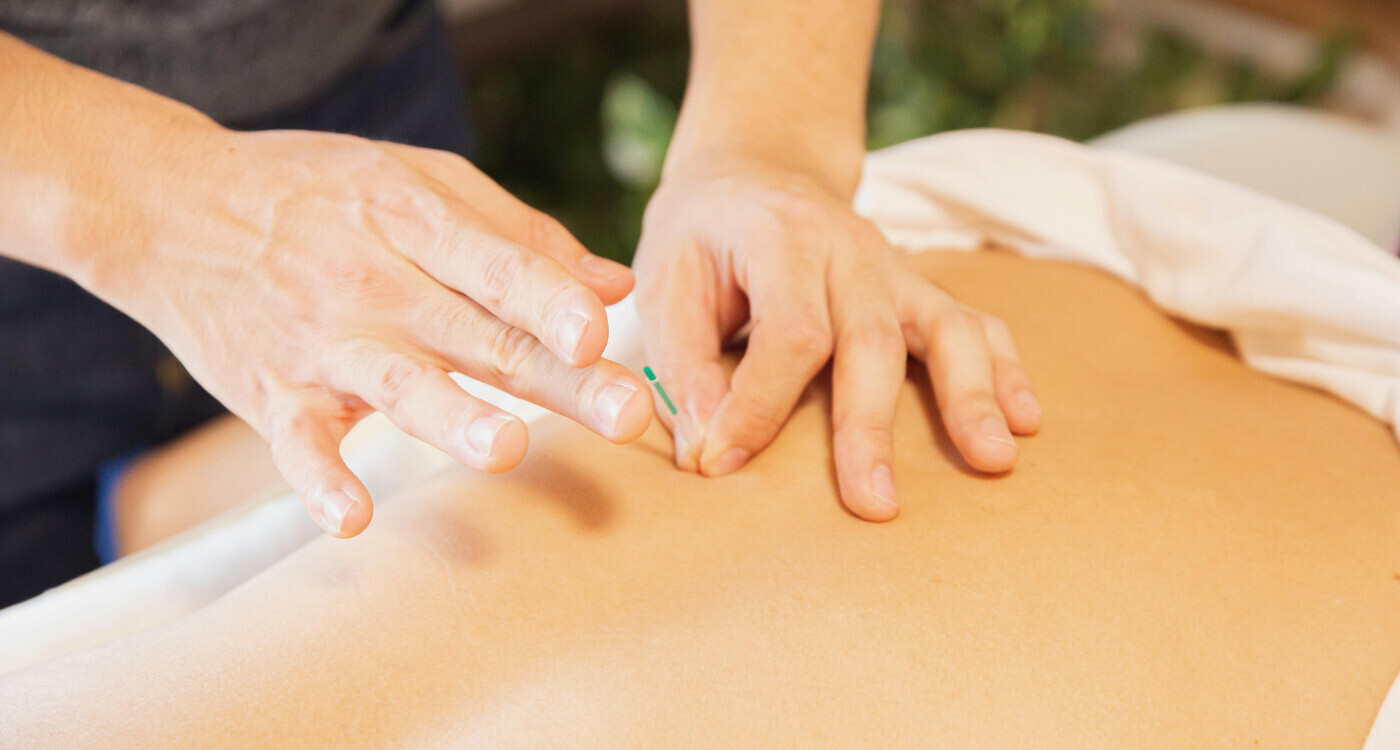
Dry needling is rooted in Western anatomy. The needle goes straight into a tight, irritated spot in a muscle, called a trigger point, to help that muscle relax.
Same tool. Different map.
What is dry needling?
Dry needling targets trigger points. These are knotted, tender spots in a muscle that can hurt right where they are or send pain somewhere else (that's called referred pain). A tight spot in your neck, for example, can show up as a headache behind your eye.
So how does dry needling work? When a thin needle hits an active trigger point, the muscle usually gives a quick twitch. That twitch is a good sign. It means we found the right spot and the muscle is starting to release. Dry needling can ease tightness, boost blood flow, and reduce pain both at the spot and where it's referring.
And why "dry"? Because no liquid gets injected. A needle used for an injection of medication, like botox, is a "wet" needle. Ours are a solid, thin filament.
What is acupuncture?
Acupuncture has been practiced for thousands of years, and licensed acupuncturists train for years to do it well. Needles are placed at specific points based on Traditional Chinese Medicine principles, and they often stay in for around 20 to 30 minutes while you relax.
I'll be upfront, I'm a chiropractor, and I won't pretend to be an acupuncture expert. What I can tell you is that research summarized by the National Center for Complementary and Integrative Health suggests acupuncture may help with some chronic pain, like low back pain, neck pain, and knee arthritis. It may also cut down on how often tension headaches show up. Plenty of people love it, and a good acupuncturist is a great resource.
Why dry needling is what I use in my clinic
Dry needling fits the way I already think about pain. Every visit starts with how you move, where things feel stuck, and which muscles are working overtime. It lets me go straight to that muscle and help it relax.
It also plays nicely with everything else I do. I often pair dry needling with a little electrical stimulation to help the muscle fatigue and reset, then follow up with an adjustment or corrective exercises so the area stays calm. Dry needling works best as part of a plan, and it slots right into mine.
I've trained through Structure & Function Education, a world leader in dry needling, rehab and performance education. Since 2020, I’ve used dry needling to help patients move better, recover faster, and get back to doing what they love. It’s now one of the most requested services I offer.
Dry needling vs. acupuncture: Side by side comparison
- The philosophy: Acupuncture follows Traditional Chinese Medicine and the idea of energy flow. Dry needling follows muscle anatomy and how pain behaves.
- Where the needles go: Acupuncture uses mapped points, sometimes far from where it hurts. Dry needling goes right into the tight muscle causing the problem.
- How long they stay in: Acupuncture needles often stay in for 20 to 30 minutes. Dry needling is usually a shorter window, sometimes just seconds, sometimes minutes with e-stim running.
- What you feel: Acupuncture tends to feel pretty relaxing. Dry needling can bring a twitch and some slight achy pressure.
- Who does it: Licensed acupuncturists provide acupuncture. Dry needling is done by trained providers like chiropractors and physical therapists, depending on state rules.
Does dry needling hurt?
This is the question everyone actually wants answered. The honest answer is usually less than you'd expect.
The needles are so thin they're often compared to a strand of hair. Most people feel a tiny prick going in, or nothing at all. When the needle hits a trigger point, you'll feel the twitch and maybe a slight ache, kind of like when someone finds the exact knot in your shoulder. It may feel a bit novel the first time so I check in with you the whole way, and we can adjust anytime.
Afterward, it's common to feel sore for a day or two, like you had a solid workout. A little fatigue or a small bruise can happen too. If you're wondering how long to rest after dry needling, most people don't need much. You can usually get right back to your normal day. Drink plenty of water, keep moving, and the soreness shouldn't hang around longer than a couple of days.
What is dry needling used for?
I use dry needling a lot with patients here in Lawrence, KS for things like:
- Jaw pain, clicking, and TMJ headaches.
- New hip, shoulder, or heel pain during perimenopause and menopause, as a non-hormonal option.
- Sports injuries and tight, overworked muscles in athletes of all levels.
- Neck tension, low back tightness, and stubborn knots that keep coming back, possilby due to repetitve work.
Picture a weekend pickleball player whose elbow aches every time they play. Stretching helps temporarily, then the ache is right back. Dry needling can get into that deep muscle knot, and the corrective exercise afterward helps keep it from building back up.
Which one is right for you?
It depends on what you're after.
If your pain is tied to a specific muscle, like a knot in your upper back, a jaw that's always clenched, or a hamstring that keeps grabbing, dry needling is built for that. If you're drawn to a whole-body, Traditional Chinese Medicine approach, a licensed acupuncturist is the way to go. Some people do both, and that's totally fine.
The best first step is an assessment. At Young Spine & Joint, I start by looking at how you move and where the pain is really coming from before any needles come out. Sometimes dry needling is the answer, sometimes it's adjustments or soft tissue work, and usually it's a mix.
Get started today
If you're in Lawrence, KS or anywhere in Douglas County and a sore neck, jaw, hip, or shoulder is getting in the way of your life, let's figure out what's going on. You can book online or give the office a call at (785) 813-1218.
Let's win your life back.